Muah AI Alternatives — 7 Options for Privacy-Conscious Users After the Data Breach (2026)
Muah AI was hit by a widely reported data breach in 2024. If that has you looking elsewhere, here are 6 hosted platforms and a self-hosted route, compared on what they publish about privacy, plus features and price.





In 2024, Muah AI was the subject of a widely reported data breach involving user data and the prompts people had written on the platform. For a service built around uncensored chat, that is about as sensitive as data gets, and it's the main reason people search for Muah AI alternatives. Our AI girlfriend data privacy report covers the incident in more detail.
It's worth starting with a fair picture of the product itself. Muah AI scores 8.3/10 overall in our ratings. It bundles chat, voice calls, image generation and video in one place, offers custom companions with voice cloning on its Premium tier, and has thousands of community characters. It has a free tier, Basic VIP at $9.99/month, and Premium plans of up to $99.99/month for full access. The platform describes its communications as encrypted and its design as privacy-focused.
One limit up front: we can't audit any company's security, and a published privacy policy is not proof of good practice. What this page does is set out what each alternative publishes about itself (who runs it, where it's based, what it says about encryption and how you can pay), next to its features, prices and our editorial score. Use that as a starting point, then read each privacy policy before you sign up.
Why Users Look for Muah AI Alternatives
The 2024 breach. Once data has leaked, it can't be recalled. Switching platforms limits what you share from now on, but it doesn't undo past exposure. For many users, a breach on a platform where they wrote intimate content is reason enough to move.
Privacy claims you can check. Muah AI says it is encrypted and privacy-focused. After a breach, many users would rather choose a platform whose claims come with something concrete: a named company, a jurisdiction with strong data protection law, or a payment option that doesn't tie the subscription to their identity.
Stability and polish. Separate from privacy, our review lists reported app crashes, the AI sometimes confusing names or context, limited character discovery (for example, no trait filters) and video generation that can be glitchy.
The cost of full access. Basic VIP at $9.99/month adds more messages, image generation and voice and video access. Full access, including voice cloning and custom companion creation, goes up to $99.99/month.
What to Look For in a Muah AI Replacement
Who runs it, and where. A named company in a country with strong data protection law gives you clearer rights, including the right to ask for your data to be deleted. Darlink AI (FameLink SA, Switzerland), MyDreamCompanion (Miracle AI UG, Berlin) and Soulkyn AI (Cube Digital Media Ltd., Dublin) publish this, the last two under the EU's GDPR. SweetDream AI names its operator too: Tetractys Development Ltd in London.
Stated security and privacy tools. Look for specifics rather than general reassurance. Darlink AI states AES-256 encryption, a privacy dashboard and easy account deletion. Nectar AI says it stores messages securely and offers privacy controls. Some platforms make only general statements, and that is worth knowing too.
How you pay. If you don't want a subscription linked to your bank card, check payment options. AI Peeps accepts cryptocurrency alongside card payments. MyDreamCompanion processes payments through third-party payment providers and doesn't store card details itself.
What you hand over to sign up. Check whether a platform asks for ID or other personal details. MyDreamCompanion, for example, offers an anonymous registration option but uses a third-party biometric age-verification service that may collect ID images and facial scans.
Training and retention. Check each privacy policy for whether your chats are used to train models and how long they are kept. Our reviews don't document this for the platforms below, so it's a question to answer yourself before you commit.
The features you used on Muah AI. Muah AI is an all-in-one platform. If you relied on voice calls, video or a big community library, check that the alternative covers them.
The 7 Best Muah AI Alternatives in 2026
The order below puts the platforms that publish the most about their company and data handling first, then the rest by how well they cover what Muah AI users tend to want. Each heading shows our overall editorial score. Our scores are editorial ratings based on published features, plans and policies (see our methodology). They do not measure security. For background, read our AI companion privacy primer and our guide to spotting shady AI companion sites.
1. Darlink AI — 8.4/10
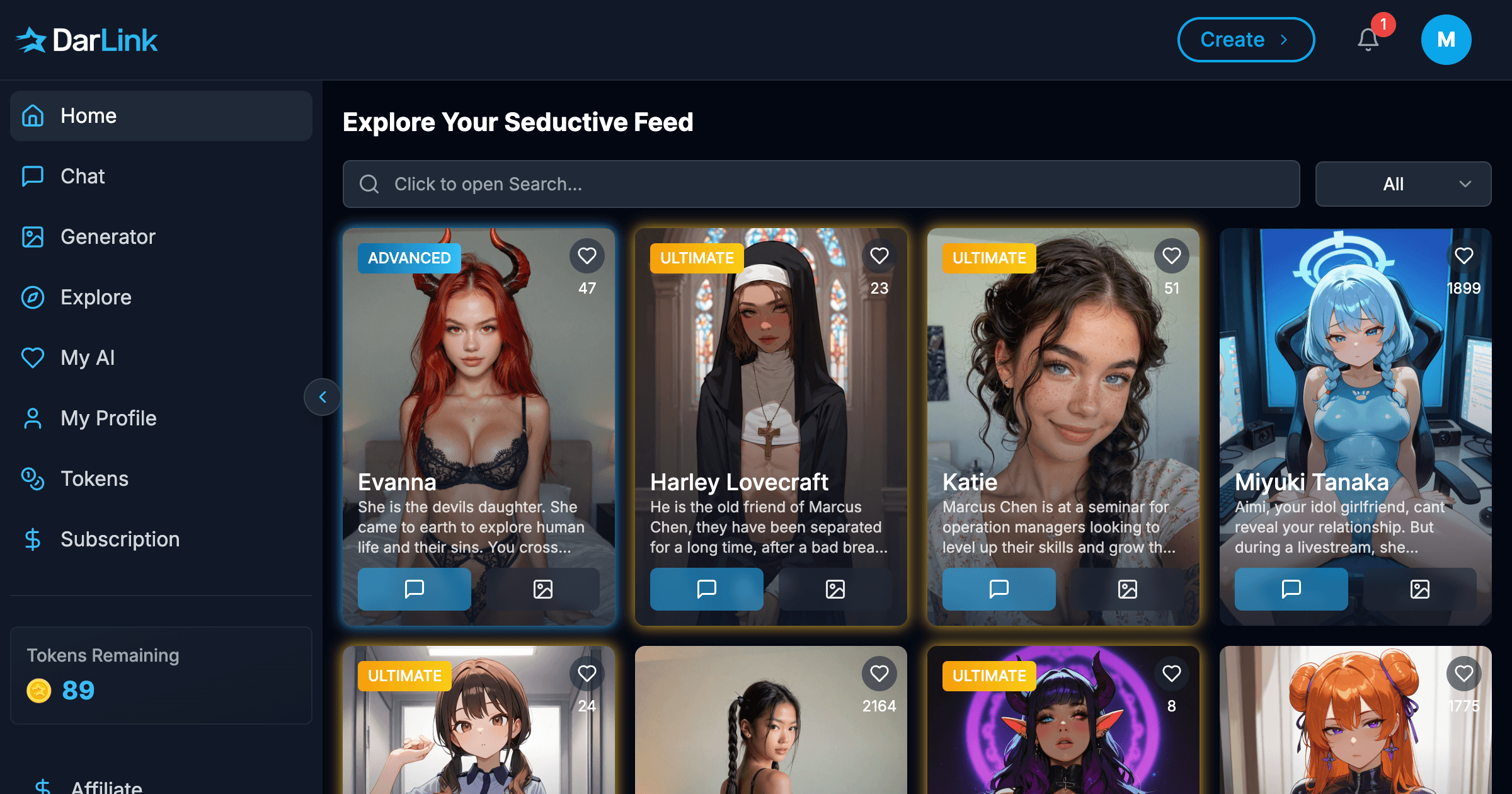
Darlink AI publishes the most about its privacy set-up of any platform on this list. It is operated by FameLink SA, a Swiss company subject to Swiss data protection law, and it states AES-256 encryption, a privacy dashboard for managing your data and easy account deletion.
As a product, it is built around companionship. Its Living Memory system keeps emotional context for 30+ days, its builder offers five visual styles and nine ethnicity options, and it shares the top Character Depth score (9.5) with a few other platforms. It generates 4K images (2 tokens each) and short video clips (20 tokens each), and voice messages use ElevenLabs voices.
Pricing: a free tier with 5 free messages and 3 free images a day (no token allowance), Essential at $12.99/month ($9.99/month billed annually) with 100 tokens, Advanced at $27.99/month with Enhanced Memory, and Ultimate at $49.99/month ($32.99/month billed annually), which is the only plan with Living Memory. Every paid plan includes unlimited text.
Weaknesses: our review notes that video generation is subscription-only and each clip costs tokens, the pre-built roster is small (about 18 characters, compared with Muah AI's thousands of community characters), the free tier is very restrictive, and there's no native app (it runs on the web only). Full review at /review/darlink-ai.
2. MyDreamCompanion — 8.3/10
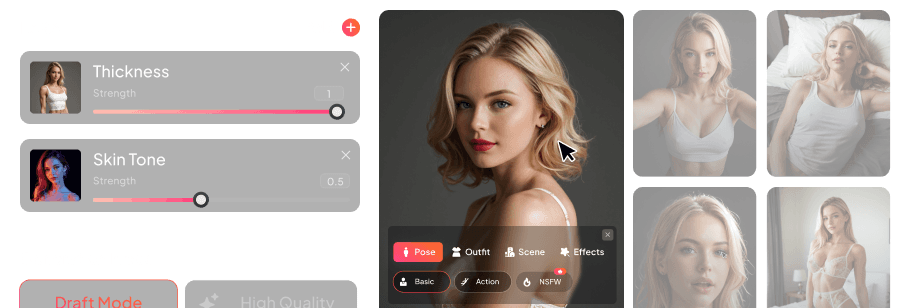
MyDreamCompanion is run by Miracle AI UG, a company registered in Berlin, which places it under the EU's GDPR. Payments go through third-party payment providers (Visa, Mastercard, Apple Pay and Google Pay) and the platform doesn't store card details. You can register anonymously or sign in with Google or Discord. The trade-off is age verification: it uses Didit, a third-party biometric service that may collect government ID images and facial scans. Decide whether you're comfortable with that before you sign up.
On features, it is the closest match here to Muah AI's visual side. It has hyper-realistic image generation (Realism 9.2 in our ratings, against Muah AI's 8.0), NSFW video in 5, 10 or 15-second clips, voice messages with 15+ voice options, and a library of 10,000+ community characters. Memory comes in two tiers: standard memory on Premium and ultra long-term memory on Ultimate.
Pricing: a free tier with no card required and 30 bonus Dream Coins. Premium is $11.99/month or $5.84/month billed annually ($69.99/year), with unlimited text messages and 100 Dream Coins a month. Ultimate is $44.99/month or $24.99/month billed annually, with unlimited messages and 800 coins. Images cost 3 coins and videos from 20.
Weaknesses: no refunds except for company-side errors, web-only access, coins that run out quickly with heavy media use, and an AI stack it doesn't publicly name. Full review at /review/mydreamcompanion.
3. AI Peeps — 9.0/10
AI Peeps is the option if you want to pay without a bank card. It accepts cryptocurrency alongside card payments, so your subscription doesn't have to be tied to a card in your name. Our review doesn't document its company location or encryption (it's built by a solo developer), so read its privacy policy for those details.
The product is strong. Text chat is unlimited on every paid plan, and the free plan includes 30 messages a day. It has 100,000+ community characters (Community score 9.0), voice chat with 20+ voices in 7 languages, image generation (10 PeepCoins per image) and videos of up to 15 seconds (from 40 PeepCoins). Peep Pro adds long-term editable memory with up to 10 memory triggers.
Pricing: free (30 text messages a day, a PeepCoin bonus at sign-up, basic memory), Peep Chat at $8.99/month, Peep Pal at $14.99/month, and Peep Pro at $29.99/month with 3,900 PeepCoins a month and editable memory.
Weaknesses: there's no native app (it's a PWA), the PeepCoin system can be confusing, there are no voice tokens on the free plan and smaller voice allowances below Peep Pro, and the monthly coin allowance doesn't roll over, so running out mid-cycle means waiting or buying more. Full review at /review/ai-peeps.
4. SweetDream AI — 9.1/10

SweetDream AI has the highest overall score of any platform we rate. Like Muah AI, it combines chat, voice, images and video, and its Video Generation score is 9.5 (Muah AI's is 8.0). It also offers live video calls and Live Cam with featured characters, which come with Premium.
On privacy, SweetDream AI is operated by Tetractys Development Ltd in London. It says conversations are encrypted and private, and that payments go through third-party processors, so it doesn't store card details. Our review still advises reading the privacy policy and terms before you sign up. If a Swiss or EU jurisdiction is your main requirement, Darlink AI or MyDreamCompanion fit better.
Pricing: a free tier with daily free messages. Premium costs $12.99 a week, $79 for 3 months or $179 a year (there's no monthly plan), and adds custom companion creation, live AI phone calls, live video calls and Live Cam with featured characters, spicy image and video generation, and 400 tokens a month.
Weaknesses: it's browser-only (no native app), live features need Premium, and the free tier has daily message limits. Full review at /review/sweetdream-ai.
5. Soulkyn AI — 8.5/10
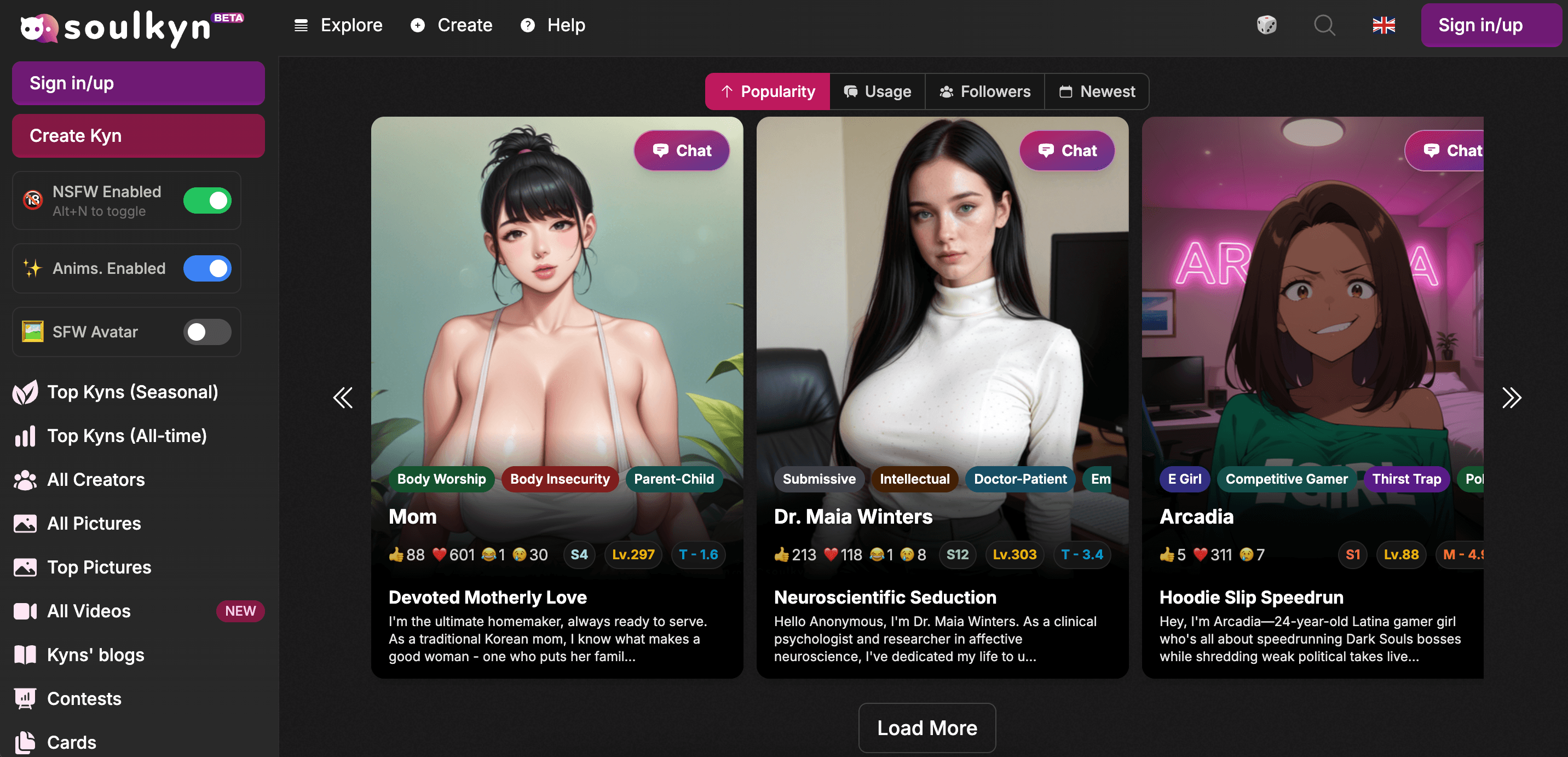
Soulkyn AI is the pick if conversation matters most to you. Its Chat Quality score is 9.5 (Muah AI's is 8.5), it runs uncensored models (its in-house Gwem on Premium, GLM 5.2 on Deluxe), and every paid plan includes unlimited characters and memories, with group chat on Deluxe. It is operated by Cube Digital Media Ltd. in Dublin, Ireland, but our review describes its privacy approach only in general terms (security measures and privacy protections), so check the policy for specifics.
Pricing: a limited free plan, Premium at €24.99/month (unlimited messages, a 300-image quota and 300 voice messages) and Deluxe at €49.99/month (unlimited images and voice).
Weaknesses: Soulkyn AI is web-only, video is limited to short clips made from images, from Premium up (Video Generation 6.0), the free plan is basic, and our review lists its pricing as higher than some competitors. Full review at /review/soulkyn-ai.
6. Nectar AI — 7.9/10
Nectar AI says it stores messages securely and offers privacy controls. Its NSFW mode is optional, so adult content is only on if you turn it on. The product centres on story: a fantasy roleplay engine for custom stories and dynamic scenarios, full control over a companion's appearance, personality, voice and backstory, plus image and video generation.
Pricing: free (15 messages and 10 generations a day for one custom companion), Premium at $9.99/month, Pro at $19.99/month and Ultimate at $34.99/month. Ultimate adds unlimited messaging, video generation and long-term memory. Annual plans are about 50% off.
Weaknesses: the free tier is tight, video and the best features are on Ultimate, and it's web-only. Full review at /review/nectar-ai.
7. Honorable mention: self-hosted setups
The seventh option isn't a platform. If you want no third party to hold your chats at all, you can run an open-source model on your own computer. Nothing leaves your machine, but you need some technical skill and capable hardware, and you give up the convenience and built-in media features of a hosted app. Our guide to open-source and self-hosted AI companions explains the options. Most people leaving Muah AI want a hosted service, which is why the rest of this page focuses on those.
Feature Comparison Table
| Platform | Company and base (as published) | Privacy and payment details (as published) | Voice and video | Free option | Entry paid plan | Our score |
|---|---|---|---|---|---|---|
| Muah AI | Not in our review | Says communications are encrypted | Voice calls (US-only), video, voice cloning on Premium | Free tier | $9.99/mo | 8.3/10 |
| Darlink AI | FameLink SA, Switzerland | AES-256, privacy dashboard, easy deletion | Voice messages, video via tokens | 5 messages, 3 images/day | $12.99/mo ($9.99 annual) | 8.4/10 |
| MyDreamCompanion | Miracle AI UG, Berlin (EU GDPR) | Third-party payment providers, no stored card details; biometric age check | Voice messages and calls, video via coins | Free tier, 30 bonus coins | $11.99/mo ($5.84 annual) | 8.3/10 |
| AI Peeps | Not in our review | Crypto or card | Voice chat, video via PeepCoins | 30 messages/day | $8.99/mo | 9.0/10 |
| SweetDream AI | Tetractys Development Ltd, London | Says chats are encrypted; third-party payment processors, no stored card details | Voice calls, video, live video calls (featured characters) | Daily free messages | $12.99/wk ($179/yr) | 9.1/10 |
| Soulkyn AI | Cube Digital Media Ltd., Dublin (EU GDPR) | General statement only | Voice messages and calls, video from Premium | Limited free plan | €24.99/mo | 8.5/10 |
| Nectar AI | Not in our review | Secure message storage, privacy controls | Voice on paid tiers, video on Ultimate | 15 messages/day | $9.99/mo | 7.9/10 |
"Not in our review" means our review doesn't document it, not that the platform lacks it. Check each platform's privacy policy, and check current prices before you subscribe. For the wider field, see the AI girlfriend platforms directory.
How to Migrate From Muah AI — Including Breach Response
If you had a Muah AI account, treat anything you wrote there as possibly exposed and act on that basis.
Change reused passwords. If you used your Muah AI email and password anywhere else, change those passwords now. A password manager makes unique passwords easy, and two-factor authentication helps wherever it's offered.
Watch for phishing and extortion. Be wary of emails or messages that mention the breach and ask for money, log-in details or personal information. Don't reply, and don't click links in them.
Save what you want, then delete your account. If you want to keep any characters or conversations, save them locally first and store them somewhere secure. Then use the account options or contact Muah AI's support to ask for full deletion, and ask for written confirmation. If GDPR applies to you, you can cite your right to erasure.
Review your payment method. If you paid by card, check your statements. If you'd feel safer, most card issuers will replace a card on request, and a virtual card is a reasonable choice for future subscriptions.
Start fresh with better habits. On the new platform, use a dedicated email address, avoid your real name and identifying details, and don't paste in old transcripts. Rebuild the characters you care about from a short description of their personality instead.
Muah AI vs. The Best Alternatives
Muah AI has real strengths. It puts chat, voice calls, images and video in one place, it offers voice cloning on Premium, and it has thousands of community characters and an active community on Reddit and Discord. At 8.3/10, it scores the same as MyDreamCompanion, lower than Soulkyn AI and higher than Nectar AI.
What you may give up by switching: voice cloning (of the six hosted alternatives, only AI Peeps documents it) and a large community library on some platforms (Darlink AI has about 18 pre-built characters).
What you can gain: a named company in a strong data protection jurisdiction (Darlink AI, MyDreamCompanion), payment without a bank card (AI Peeps), live video calls and the highest overall score we give (SweetDream AI), or chat-first quality (Soulkyn AI).
Which Alternative Should YOU Pick?
You want a named company under strong data protection law. Choose Darlink AI (Swiss, AES-256, privacy dashboard) or MyDreamCompanion (Berlin, EU GDPR, third-party payment providers without stored card details). Review MyDreamCompanion's biometric age check before you sign up.
You want to pay without a bank card. AI Peeps accepts cryptocurrency, and its free tier includes 30 text messages a day.
You want the best overall product. SweetDream AI has the highest overall score we give (9.1/10), plus live AI phone calls and video calls with featured characters on Premium. Its yearly Premium plan costs $179 (shown as $3.44 a week).
You want the best conversation. Soulkyn AI has a Chat Quality score of 9.5 and unlimited messages on Premium.
You want story-driven roleplay with adult content off by default. Nectar AI's NSFW mode is optional and its roleplay engine is built for stories.
You want no third party involved at all. Look at a self-hosted setup and accept the extra effort.
Frequently Asked Questions
What happened in the Muah AI data breach? In 2024, Muah AI was the subject of a widely reported data breach involving user data and the prompts people had written on the platform. Our data privacy report covers it in more detail.
Is Muah AI safe to use now? We can't verify any platform's security, including Muah AI's. The platform describes its communications as encrypted. Our 8.3/10 score rates its features and plans, not its security. If you stay, use a dedicated email address and a unique password, and avoid sharing identifying details.
Which alternative publishes the most about privacy? Darlink AI (FameLink SA in Switzerland, AES-256 encryption, a privacy dashboard and easy account deletion) and MyDreamCompanion (Miracle AI UG in Berlin under GDPR, third-party payment providers, no stored card details). For paying without a bank card, AI Peeps accepts crypto.
How do I delete my Muah AI account? Use the account options or contact Muah AI's support, ask for full deletion and ask for written confirmation. If GDPR applies to you, cite your right to erasure. Save anything you want to keep first.
Does switching platforms undo past exposure? No. Switching limits what you share from now on. It doesn't recall data that has already leaked, which is why password changes and caution with suspicious emails matter too.
Which alternative has voice cloning like Muah AI? Of the six hosted alternatives, only AI Peeps documents it in our reviews: you can design or clone custom voices. For voice in general, SweetDream AI, AI Peeps and Soulkyn AI share Muah AI's Voice score of 8.5. SweetDream AI adds live AI phone calls and video calls with featured characters, and AI Peeps offers 20+ voices in 7 languages.
Which jurisdiction is best for privacy? Switzerland and the EU have strong data protection laws that give you clear rights, including deletion. That helps, but it doesn't guarantee good security, so read the privacy policy too.
The CompanionRank Verdict
If privacy is why you're leaving Muah AI, start with Darlink AI or MyDreamCompanion. They publish a named company and a jurisdiction with strong data protection law. Darlink AI adds stated AES-256 encryption and a privacy dashboard, while MyDreamCompanion is cheaper on an annual plan but uses biometric age verification. If you want to pay without a bank card, choose AI Peeps.
If product quality matters most, SweetDream AI has the highest overall score we give and offers live video calls and Live Cam with featured characters, though it is based in London rather than Switzerland or the EU.
In order of our overall score: SweetDream AI (9.1), AI Peeps (9.0), Soulkyn AI (8.5), Darlink AI (8.4), MyDreamCompanion (8.3) and Nectar AI (7.9). Whichever you choose, read the privacy policy before you sign up, use a dedicated email address, and share only what you'd be comfortable seeing in a breach.