Candy AI Alternatives — 7 Platforms Compared on Price, Memory and Features (2026)
Candy AI pairs a detailed character builder with unlimited text chat on Premium and tokens for voice, images and video. If you want more free chat, live video calls or a bigger community library, compare these 7 alternatives.




If you are looking for Candy AI alternatives in 2026, start with a fair picture of what you'd be leaving. Candy AI is one of the stronger platforms we rate: 8.5/10 overall, with a Character Depth score of 9.5 and 9.0 for both Chat Quality and Image Generation. Its "Create My AI Girlfriend" builder covers ethnicity, age, eyes, hair, body, personality, voice and hobbies, and it sits alongside 100+ pre-built characters. Chat, voice, image generation and video are all available, there's a free account (5 messages, 1 custom character and 1 image), billing is discreet, and you can pay in crypto.
So the case for switching is not that Candy AI is shallow. It's that Candy AI is built a particular way: voice, images and video run on tokens, the free account is only 5 messages, live video is limited to per-minute Candy Roulette chats, and its library is curated by the company rather than a large community. If one of those is the problem for you, one of the seven platforms below will probably fit better. We'll be clear about where Candy AI still has the edge.
Why Users Look for Candy AI Alternatives
Tokens for media. Candy AI's Premium includes unlimited text chat, but voice replies, images, video and custom characters share one token balance. Every Premium billing option includes 100 tokens a month, each action shows its token cost before you confirm, and top-up packs are available if you run out. Our review notes that moderate users usually stay within their allowance, but heavy image or voice users may need to top up. If you'd rather have fixed media quotas or more free chat, Soulkyn AI's Premium (set image and voice quotas), AI Peeps (30 free messages a day) and SpicyChat AI (unlimited free messages) all handle it differently.
A very small free account. The free account covers 5 messages across all characters, 1 custom character and 1 image. After that you choose a monthly, quarterly or yearly Premium plan: $13.99/month ($9.99 for the first month), $26.97 every 3 months or $47.88 a year (advertised at 70% off). Every alternative on this list also has a free tier, and most of them give you more ongoing use, though they're still limited.
Limited live video. Candy AI generates video clips and has voice calls (beta), but its live video is limited to Candy Roulette video chats at 5 tokens a minute; no video call with your own custom companion is documented. SweetDream AI offers live video calls and Live Cam with featured characters on Premium.
A curated library, not a community one. Candy AI's 100+ characters are professionally made, each with its own backstory and conversation style. If you'd rather browse a much larger user-made library, SpicyChat AI (100k+ community characters), AI Peeps (100,000+) and MyDreamCompanion (10,000+) are built for it. Candy AI's Community score is 6.0, while SpicyChat AI's is 9.5.
Memory without published details. Candy AI says its companions learn your style and remember your preferences. Unlike some alternatives, it doesn't publish retention periods, and the only memory upgrade it lists is "memory slots" on Premium Plus. If you want long-term memory you can see in a plan description, look at Darlink AI's Living Memory, MyDreamCompanion's ultra long-term memory or AI Peeps' editable memory.
What to Look For in a Candy AI Replacement
How usage is billed. Decide whether you want flat-rate chat or don't mind a currency. Several alternatives also use coins or tokens for media (Darlink AI tokens, Dream Coins, PeepCoins), so switching doesn't always mean escaping a token system. It mostly changes what costs extra.
A free tier you can keep using. Free tiers range from generous (unlimited text chat on SpicyChat AI, 30 messages a day on AI Peeps) to tight (15 messages a day on Nectar AI, 5 messages on Darlink AI).
A character builder at least as good as Candy AI's. Candy AI's builder is one of the most detailed around. SweetDream AI, Darlink AI, AI Peeps and SpicyChat AI share its 9.5 Character Depth score, while Soulkyn AI (9.0), MyDreamCompanion (8.8) and Nectar AI (8.5) are a little lower. Choose by building style: Darlink AI offers five visual styles and nine ethnicity options, MyDreamCompanion has three creation modes and 40+ persona tags, and SpicyChat AI and AI Peeps focus on community-built characters.
Memory that's described on the plan. Look for a named memory feature and check which tier it comes with. The strongest memory options on this list are usually on the most expensive plans.
Media you'll actually use. For video, our Video Generation scores range from 9.5 (SweetDream AI) to 3.0 (SpicyChat AI), with Candy AI at 7.5. If images and video matter, check the scores.
Billing and privacy. Candy AI offers discreet billing and crypto. AI Peeps also accepts crypto, Darlink AI is Swiss-based with a privacy dashboard, and MyDreamCompanion operates under EU GDPR and processes payments through third-party payment providers.
The 7 Best Candy AI Alternatives in 2026
The order below follows how directly each platform answers the reasons above, not overall score. Each heading shows our overall editorial score. Our scores are based on published features, plans and policies, not on hands-on tests (see our methodology). Two alternatives score higher than Candy AI overall (SweetDream AI and AI Peeps), and Soulkyn AI ties it. The rest score a little lower overall but do at least one thing Candy AI doesn't.
1. SweetDream AI — 9.1/10

SweetDream AI has the highest overall score of any platform we rate. It offers the same multimodal mix as Candy AI (chat, voice, images, video and voice calls), plus live video calls and Live Cam with featured characters. Its Video Generation score is 9.5, against Candy AI's 7.5.
The free tier includes daily messages with the ready-made characters. Premium costs $12.99/week, $79 every 3 months or $179/year (there's no monthly plan). It adds custom companion creation, premium chat at 3x speed, live AI phone calls, live video calls and Live Cam with featured characters, spicy image and video generation, and 400 tokens a month.
Weaknesses: SweetDream AI is browser-only, calls and video calls need Premium and are paid in tokens, video calls are limited to featured characters, and the free tier has daily message limits. Full review at /review/sweetdream-ai, with a direct matchup at /blog/sweetdream-vs-candy-ai.
2. Darlink AI — 8.4/10
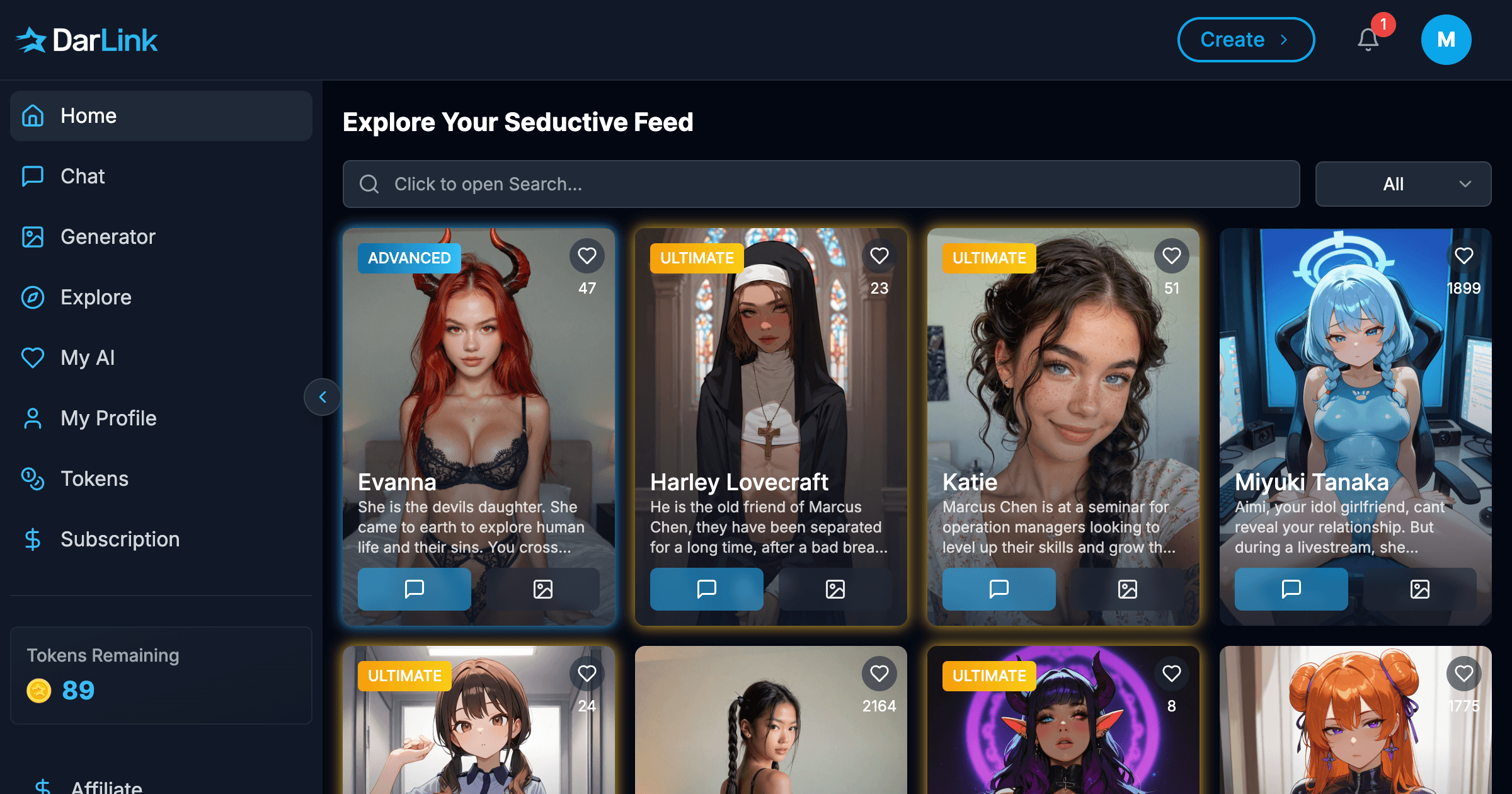
Darlink AI is the pick if memory is your main concern. Its Living Memory system is built to keep emotional context for 30+ days, and its scenario-driven roleplay engine has you write a backstory before chat starts. Its builder offers five visual styles, nine ethnicity options and personality tuning from shy to bold, and it matches Candy AI's Character Depth score of 9.5. It is Swiss-based, with AES-256 encryption and a privacy dashboard.
Two things to know before you switch. Living Memory is only on the Ultimate plan at $49.99/month ($32.99/month billed annually). Essential costs $12.99/month ($9.99/month billed annually) and includes unlimited text, 100 tokens a month and Base Memory. Darlink AI uses tokens for media (2 per image, 20 per video), so you're still dealing with a currency.
Weaknesses: video generation is subscription-only and each clip costs tokens, the free tier is very restrictive (5 messages), there's no App Store or Google Play app, and the pre-built roster is limited compared with Candy AI's 100+. Review at /review/darlink-ai.
3. MyDreamCompanion — 8.3/10
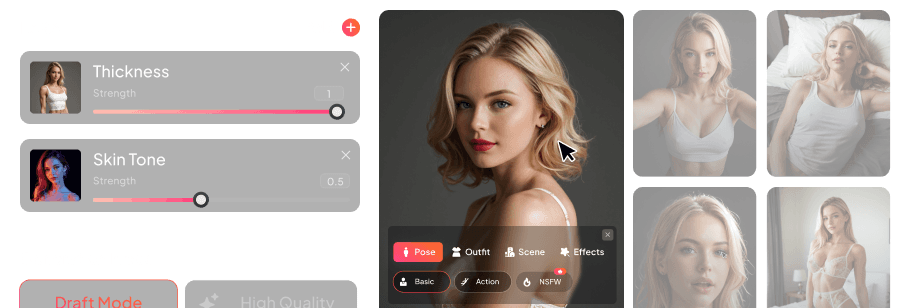
MyDreamCompanion pairs documented memory tiers with a strong visual side: standard memory on Premium, ultra long-term memory on Ultimate, hyper-realistic images (Realism 9.2 in our ratings, against Candy AI's 8.5) and NSFW video in 5, 10 or 15-second clips. It also has a library of 10,000+ community characters, 40+ persona tags and a free tier that needs no card and includes 30 bonus Dream Coins.
Premium costs $11.99/month, or $5.84/month billed annually ($69.99/year), one of the lowest annual prices in this segment. It includes unlimited text messages, 100 Dream Coins a month, and voice messages and calls. Ultimate costs $44.99/month or $24.99/month billed annually and adds 800 coins, ultra long-term memory and longer video generation. Images cost 3 coins and videos from 20.
Weaknesses: subscriptions aren't refunded except for company-side errors, it's web-only, coins run out quickly with heavy media use, and age verification uses a third-party biometric service. Review at /review/mydreamcompanion.
4. Soulkyn AI — 8.5/10
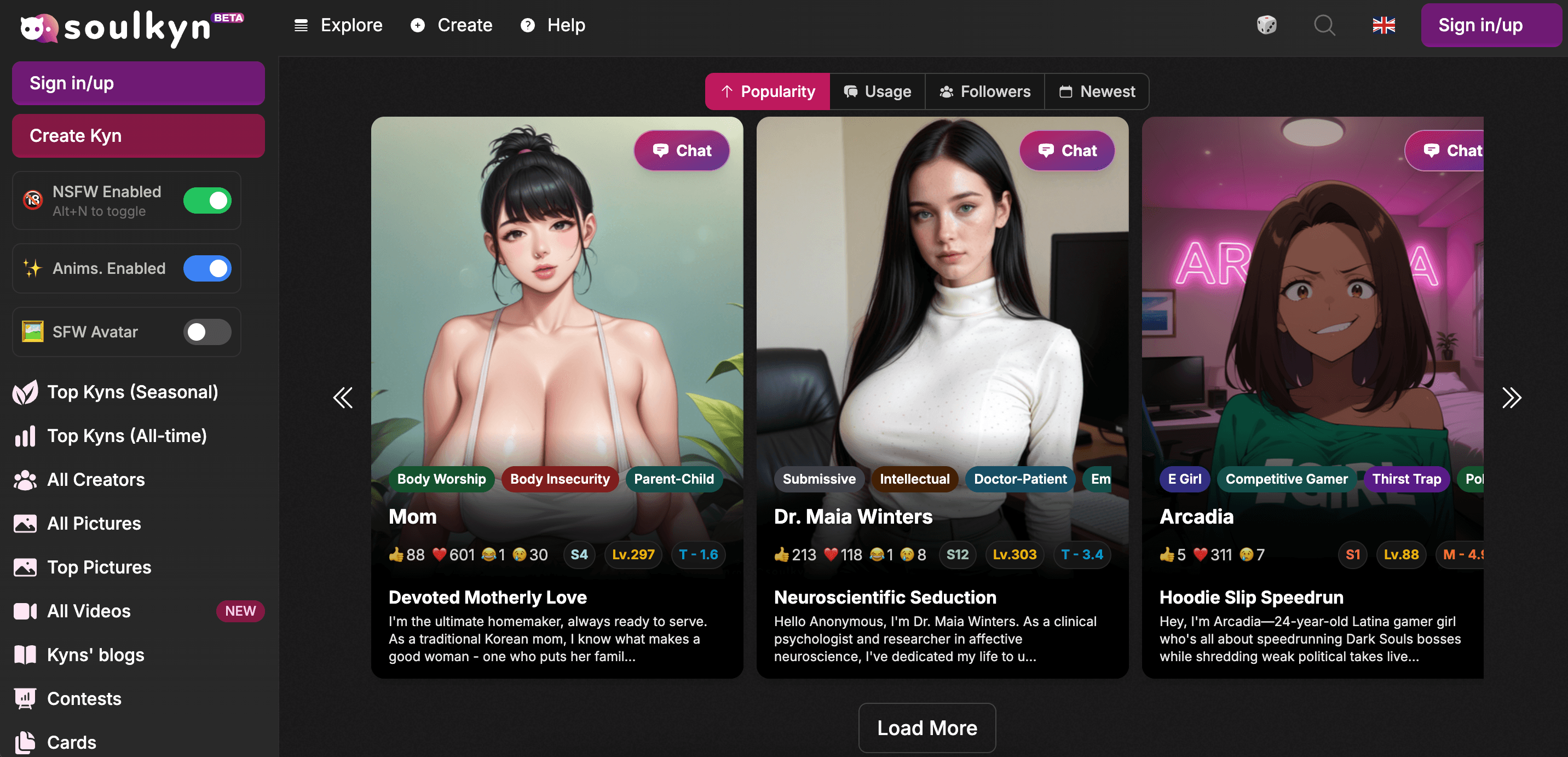
Soulkyn AI puts conversation first. Its Chat Quality score is 9.5 (Candy AI's is 9.0), it runs Gwem, its in-house uncensored model (GLM 5.2 on Deluxe), and every paid plan includes unlimited characters and memories, with group chat on Deluxe. Chat isn't billed by token: Premium and Deluxe include unlimited messages. On Premium, images and voice come from fixed quotas.
Pricing: Premium €24.99/month (unlimited messages, 300-image quota, 300 voice messages, video generation), Deluxe €49.99/month (unlimited images and voice, group chat).
Weaknesses: Soulkyn AI is web-only, video is limited to short clips made from images (Video Generation 6.0), the free plan is basic, and our review lists its pricing as higher than some competitors. Review at /review/soulkyn-ai.
5. Nectar AI — 7.9/10
Nectar AI is built around story. Its fantasy roleplay engine supports custom stories, dynamic scenarios and fan-fiction-style narratives. You control appearance, personality, voice, backstory and behavior, and you can generate images and video.
Unlike Candy AI's 5-message free account, it has a daily free tier: 15 messages and 10 generations a day for one custom companion. Premium is $9.99/month, Pro $19.99/month and Ultimate $34.99/month. Ultimate adds unlimited messaging, video generation and long-term memory. Annual plans are about 50% off.
Weaknesses: the free tier is tight, the best features are only on Ultimate, and Nectar AI is web-only. Review at /review/nectar-ai.
6. AI Peeps — 9.0/10
AI Peeps pairs a free daily allowance with low-cost unlimited chat: the free plan includes 30 text messages a day, and text chat is unlimited on every paid plan from $8.99/month. It also has one of the two biggest libraries on this list (100,000+ community characters, Community score 9.0), alongside SpicyChat AI, and long-term editable memory with up to 10 memory triggers on Peep Pro ($29.99/month).
Images (10 PeepCoins) and videos of up to 15 seconds (from 40 PeepCoins) come out of a monthly coin allowance: 300 on Peep Chat, 1,700 on Peep Pal and 3,900 on Peep Pro, with a sign-up bonus on the free plan. Failed videos aren't charged, Image Retry Tokens let you redo images, and the Forge tool lets you edit and mix images. Like Candy AI, it accepts crypto.
Weaknesses: there's no native app (it is a PWA), the PeepCoin system can be confusing, free users get no voice tokens and the lower paid plans get fewer, and the monthly allowance means waiting (or buying coins) if you run out mid-month. Review at /review/ai-peeps.
7. SpicyChat AI — 7.8/10
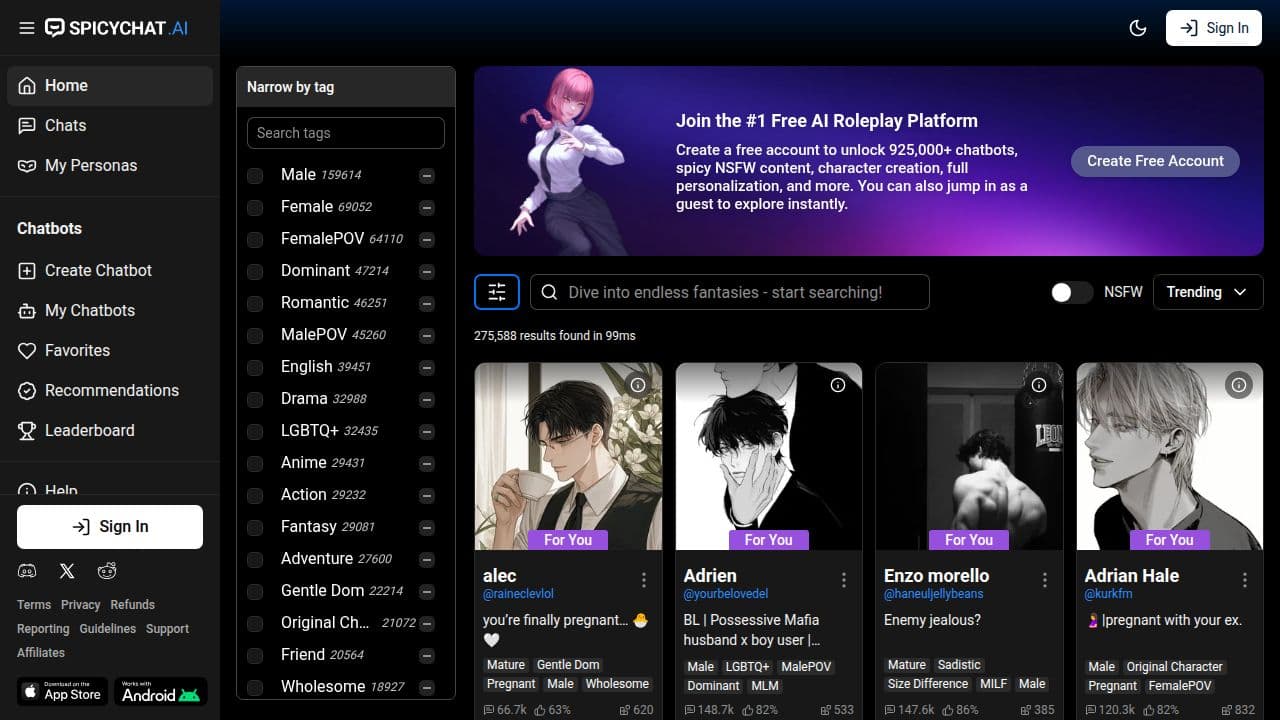
SpicyChat AI is the alternative if you want a community library. It has 100k+ community characters, unlimited character creation, and Community (9.5) and Character Depth (9.5) scores that are among the highest we give. The free tier includes unlimited messages, though there may be wait times.
Paid plans start at $5.95/month (ad-free, skip the line, Memory Manager), then $19.95/month (8K context, Semantic Memory 2.0, conversation images, advanced models) and $29.95/month (up to 32K context, priority queue, SpicyXL). Annual billing saves about 16%. Group chat with multiple characters is supported.
Weaknesses: SpicyChat AI isn't a visual platform (Image Generation 7.0, Video Generation 3.0), the best memory is on paid tiers, and character quality varies because anyone can publish. Review at /review/spicychat-ai. For another Candy AI matchup, see /blog/candy-ai-vs-crushon-ai.
Feature Comparison Table
| Platform | How usage is paid | Memory (as published) | Free option | Video / live calls | Entry paid plan | Our score |
|---|---|---|---|---|---|---|
| Candy AI | Unlimited text on Premium; tokens for voice, images and video | Learns your style and preferences | 5 messages, 1 image | Video clips; voice calls (beta), Candy Roulette | $13.99/mo ($3.99 annual) | 8.5/10 |
| SweetDream AI | Premium, plus tokens for calls and media | Memory system | Daily free messages | Video, live calls, video calls (featured characters) | $12.99/wk ($179/yr) | 9.1/10 |
| Darlink AI | Unlimited text; tokens for media | Base memory; Living Memory on Ultimate | 5 messages, 3 images/day | Video via tokens | $12.99/mo ($9.99 annual) | 8.4/10 |
| MyDreamCompanion | Unlimited text; Dream Coins for media | Standard; ultra long-term on Ultimate | Free tier, 30 bonus coins | Video via coins | $11.99/mo ($5.84 annual) | 8.3/10 |
| Soulkyn AI | Unlimited messages, image quotas | Unlimited memories on paid plans | Limited free plan | Short video clips | €24.99/mo | 8.5/10 |
| Nectar AI | Message caps by plan; unlimited on Ultimate | Long-term memory on Ultimate | 15 messages/day | Video on Ultimate | $9.99/mo | 7.9/10 |
| AI Peeps | Unlimited text on paid plans; PeepCoins for media | Editable long-term memory on Peep Pro | 30 messages/day | Video via PeepCoins | $8.99/mo | 9.0/10 |
| SpicyChat AI | Unlimited messages; tiers add context | Memory Manager from $5.95 | Unlimited messages | No video | $5.95/mo | 7.8/10 |
Prices are as listed in our reviews and change often, so check the current price before you subscribe. For a broader view, the full directory lives at /ai-girlfriend-platforms, side-by-side comparisons are at /compare, and the top of the category is at /best-ai-girlfriends.
How to Migrate From Candy AI
Companion platforms don't import each other's characters or chat history, so assume your Candy AI companion stays on Candy AI. Check its settings for any export options, but plan to rebuild.
First, save what you want to keep before you cancel: screenshots of conversations that mattered, and any generated images you'd like to keep. Download them while your account is active.
Second, write a short personality brief for each character you want to rebuild. Include your builder choices (look, personality type, voice, hobbies) and, more importantly, how the character behaved: what made her funny, how she responded when you were stressed, which inside jokes came up. Most alternatives accept free-form personality and backstory text, and that's where these details belong.
Third, rebuild on the new platform and give it a week or two. A new model won't reproduce your Candy AI companion exactly, so aim for the same personality rather than a copy.
Fourth, sort out tokens and billing. Check your plan terms on whether unused tokens roll over or lapse, and use the ones you care about before your billing period ends. Then cancel through your account settings, or through whichever store you subscribed with.
Candy AI vs. The Best Alternatives
Candy AI has real strengths. Its character builder is one of the most detailed available. Its 100+ pre-built characters each have a distinct conversation style. Our review rates its image output near the top for realism and character consistency, and every token cost is shown before you confirm. Add discreet billing, crypto payments, two-factor authentication and 24/7 support, and it's a well-rounded product.
What you gain by switching depends on the alternative: more free chat (SpicyChat AI, AI Peeps, Nectar AI), live video calls with featured characters (SweetDream AI), documented long-term memory tiers (Darlink AI, MyDreamCompanion, AI Peeps) or a much larger community library (SpicyChat AI, AI Peeps, MyDreamCompanion).
The trade-offs are real too. Several alternatives still use coins for images and video, the long-term memory features usually sit on the most expensive plans, most of these platforms run in the browser, and only SweetDream AI and AI Peeps score higher than Candy AI overall.
Which Alternative Should YOU Pick?
If you like Candy AI's multimodal mix and want live video calls, go with SweetDream AI. It has the highest overall score we give, and its yearly Premium plan is $179 (shown as $3.44 a week). Full review at /review/sweetdream-ai.
If long-term memory is your priority, choose Darlink AI for Living Memory or MyDreamCompanion for ultra long-term memory. Both put their strongest memory on the Ultimate plan, and MyDreamCompanion's annual pricing is lower. Reviews at /review/darlink-ai and /review/mydreamcompanion.
If conversation matters more than visuals, Soulkyn AI offers a 9.5 Chat Quality score and unlimited messages on Premium. If you think in stories and scenarios, try Nectar AI. Reviews at /review/soulkyn-ai and /review/nectar-ai.
If you want more free chat, AI Peeps gives you 30 free text messages a day and unlimited text chat on every paid plan, plus editable memory on Peep Pro. Review at /review/ai-peeps.
If you want the biggest library and the cheapest paid entry ($5.95/month), SpicyChat AI's community model is the answer. Review at /review/spicychat-ai.
Frequently Asked Questions
Is Candy AI's memory good? Candy AI says its companions learn your style, preferences and interests and adjust their responses over time. Its Realism score, which covers memory of earlier conversations, is 8.5. It doesn't publish retention periods, and beyond the "memory slots" on Premium Plus it doesn't describe memory tiers, so if documented long-term memory matters to you, compare Darlink AI, MyDreamCompanion and AI Peeps.
What's a cheaper alternative to Candy AI? For free use, SpicyChat AI (unlimited free messages) and AI Peeps (30 free text messages a day). For low-cost monthly plans, SpicyChat AI starts at $5.95/month and AI Peeps at $8.99/month, both below Candy AI's $13.99. On yearly billing, Candy AI's own $3.99/month is hard to beat.
Can I transfer my Candy AI characters? No. Platforms don't import each other's characters or history. You can rebuild a character from your notes and screenshots, but it's a fresh start on the new platform.
Which Candy AI alternative has the best customization? Candy AI already shares the top Character Depth score (9.5) with SweetDream AI, Darlink AI, AI Peeps and SpicyChat AI. The difference is style: Darlink AI has five visual styles and nine ethnicity options, MyDreamCompanion has three creation modes and 40+ persona tags, and SpicyChat AI and AI Peeps focus on community characters you can use or adapt.
Is Candy AI worth it? If you want a detailed character builder, multimodal chat and discreet billing, and you don't mind tokens, Candy AI is a strong choice at 8.5/10. The free account (5 messages, 1 custom character and 1 image) is the easiest way to find out, and the first month of Premium is $9.99.
Are Candy AI alternatives safer? It depends on the platform. Candy AI lists encrypted transactions, GDPR-compliant data handling, discreet billing and two-factor authentication. Darlink AI is Swiss-based with AES-256 encryption. MyDreamCompanion operates under EU GDPR and doesn't store card details, but uses third-party biometric age verification. Read each platform's privacy policy and our individual reviews before you sign up.
Which platform is best for long-term relationships? Look for documented long-term memory: Darlink AI's Living Memory, MyDreamCompanion's ultra long-term memory and AI Peeps' editable memory on Peep Pro. Memory-focused companions like Nomi AI and Kindroid are also worth a look if you want native mobile apps.
The CompanionRank Verdict
Candy AI is a strong platform. At 8.5/10, it scores higher overall than four of the seven alternatives on this page and ties with Soulkyn AI. If its builder, multimodal features and token system suit how you use it, there's no urgent reason to switch.
The alternatives make sense when Candy AI's design gets in your way. SweetDream AI is the pick for live video calls and AI phone calls. Darlink AI and MyDreamCompanion are the picks for documented long-term memory. Soulkyn AI is for conversation-first users, and Nectar AI for storytellers. AI Peeps suits users who want 30 free messages a day and editable memory, and SpicyChat AI suits users who want the largest community library.
Here they are in order of our overall score: SweetDream AI (9.1), AI Peeps (9.0), Soulkyn AI (8.5), Darlink AI (8.4), MyDreamCompanion (8.3), Nectar AI (7.9) and SpicyChat AI (7.8). Whichever you consider, try its free tier first and check which plan includes the features you care about before you pay.